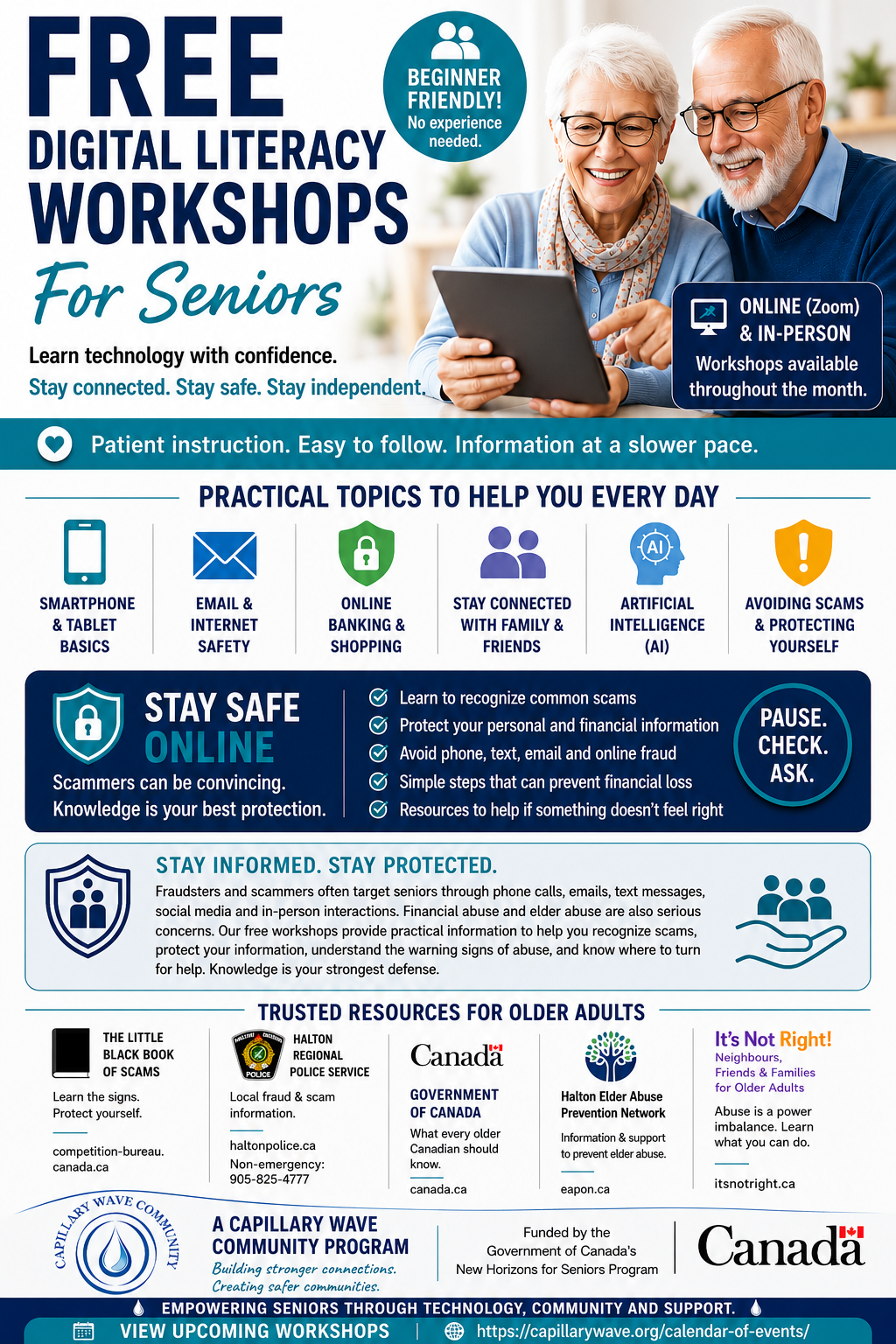
Technology has opened up incredible opportunities for older adults to stay connected with family, access services, and enjoy greater independence. Unfortunately, it has also created new opportunities for fraudsters and scammers who often target seniors through phone calls, emails, text messages, social media, and even in-person interactions.
Financial abuse and elder abuse are growing concerns, with many incidents involving people the victim knows and trusts. Knowledge is your strongest defense. Our free toolkit and workshops provide practical, easy-to-understand information to help you recognize scams, protect your personal and financial information, understand the warning signs of elder abuse, and know where to turn for help. Together, we can build safer, more connected communities where seniors can use technology with confidence and peace of mind.
Protect Yourself from Fraud and Scams
Scammers often create a sense of fear, secrecy, excitement, or urgency to pressure people into acting quickly.
Our workshops help you recognize common warning signs before you share information, send money, click a link, or allow someone to access your device.
Pause. Check. Ask.
Before responding to an unexpected call, email, text message, or online request:
Pause before taking action.
Do not share passwords, PINs, security codes or banking information.
Do not allow an unknown caller to access your computer or device.
Contact the organization using a trusted telephone number.
Speak with a family member, friend, bank representative or police before sending money.
A legitimate organization will not pressure you to keep a payment secret or demand payment through gift cards or cryptocurrency.
Recognize the Warning Signs
Be cautious when someone:
Demands immediate payment
Asks for gift cards or cryptocurrency
Claims a family member is in an emergency
Requests remote access to your device
Asks for your banking PIN or verification code
Says you won a prize you do not remember entering
Pressures you not to speak with family or friends
Promises guaranteed investment returns
Develops an online relationship and then asks for money
Threatens arrest, account closure or legal action
When something does not feel right, stop the conversation and ask for help.
Because no one should have to face darkness alone.
To those who are no longer with us—your stories, your struggles, and your strength will never be forgotten. This space is a tribute to the individuals who battled silently, inspiring us to reach out, listen, and extend a hand before it’s too late.
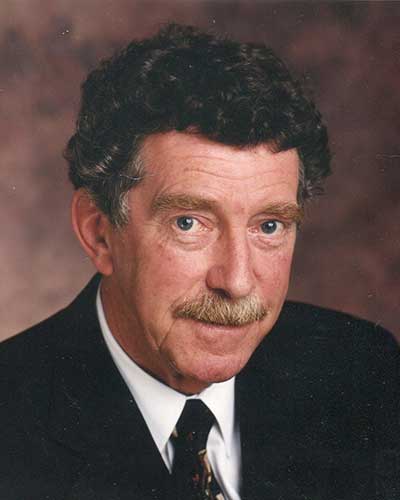
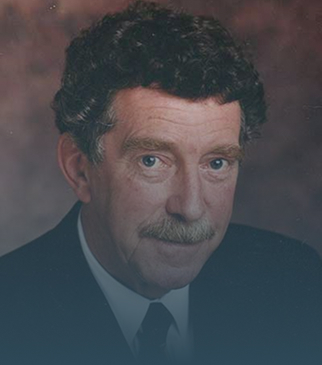
Passed away tragically and suddenly on Tuesday, September 7, 2021, at the age of 79.
The most loving father, he will be forever and deeply missed by Catherine (Steve), Kimberly (Jeff) and Matthew. Much loved grandfather of Chris, Cole, Stella, Nikki, and Madison. Survived by the mother of his children, Margaret. Lovingly remembered by his nieces and nephews, Wally was the best big brother to his surviving sibling, “Bullit” Bob. After a distinguished career in Law as Senior Partner at McLean & Kerr, Wally is greatly missed by his many respected colleagues and dear friends.
Wally was loved by all who knew him. Born in St. Catharines and raised in Port Dalhousie, he maintained a lifelong love of the water and often took his kids back to see his childhood home and his humble beginnings. He loved the Henley Regatta, and served as Co-Commodore of the Mississauga Canoe Club in the 1990s. Wally loved his backyard swimming pools, relaxing poolside at his condo in Fort Myers, family RV trips to Myrtle Beach and then visiting Goderich at his trailer on Lake Huron in his final years.
A gentle, kind and loving man, Wally instilled strong values in his children. A proud grandfather, Wally adored spending time with his grandchildren and “watching them unfold like blossoms”.
Each of his children was immensely proud of their Dad and his career. A memorable highlight was the endowment of the Walter R. Stevenson student bursary at U of T Law School by businessman and philanthropist Gallant Ho. The award is granted to a law student demonstrating significant “perseverance and determination”, qualities which Wally personified throughout his life.
He had a strength of character and tenacity of will true to his Scottish roots. Like the solitary bagpiper, he managed his pain with quiet strength and grace until it became too much to bear.
Joseph Ambrose
Joe was first and foremost a father, to a very beautiful little boy; Mason. Joe spent most of his time trying to make a better life for himself and his son. He was so kind, compassionate and could often be found spending time with animals more than people…he cared for others because he gave freely what he also needed…love. Joe left us in March of 2022, after experiencing homelessness and not being able to get the proper mental health help he needed. He is gone, but never will he be forgotten.